
Whoever the contract says owns the mold owns it — and if there is no contract, you may own less than you think. In injection molding the tool is usually the most expensive single asset in the program, and ownership comes in three forms: customer-owned (you paid for it outright), molder-owned (the molder paid for it and keeps it) and amortized (the cost is spread across the piece price, and ownership passes to you once it is paid off).
Paying for a tool is not the same as being able to move it. What makes a mold yours in practice is a written tooling agreement that says when title passes, who maintains and insures it, and how fast it comes back when you ask. Settle that before the first tooling invoice, not when you are trying to leave.
Customer-owned, molder-owned and amortized tooling
Customer-owned tooling is the most common arrangement for custom parts. You pay for the mold, usually in stages tied to milestones such as design approval, first shots and sample approval, and title passes to you on final payment. The molder holds it, runs it and maintains it, but it is your asset and it belongs on your books.
Molder-owned tooling means the molder paid for the tool and recovers the cost through the piece price, or treats it as the price of winning the business. It lowers your upfront spend, but you have no right to take that tool anywhere. If you leave, you are buying a new mold or negotiating to buy that one.
Amortized tooling sits in the middle. The tool cost is spread across a set quantity of parts, and ownership transfers once that quantity has shipped. It is a reasonable way to fund a tool, but it creates a moving balance. Leave halfway through and the questions become what you owe on the unamortized part, and whether the molder will release the tool before you pay it. The agreement should answer both.
Whichever model you choose, write it down by name. A purchase order that says 'tooling' with a dollar figure next to it is not an ownership agreement.
What the tooling agreement should say
A short, specific agreement prevents most tooling disputes. It does not need to be long. It needs to cover the points that come up when something goes wrong.
This is general information from the plant floor, not legal advice. Have your own counsel review the tooling terms before you sign, especially if the molder and the tool sit in a different country than you do.
- Ownership: title passes to you on full payment of the tooling invoice, with the payment milestones listed
- Identification: a tool number, plus an asset tag or nameplate on the mold stating the owner, part number and cavity count
- Maintenance: what the molder covers as routine preventive maintenance, what counts as repair, and who pays for damage versus normal wear
- Storage and insurance: who insures the tool at the molder's site, and what happens to a tool that sits idle
- Release on request: the tool, its documentation and last-shot samples come back when you ask, within a stated notice period
- Exit terms: how an unpaid balance or unamortized amount is calculated, and that the tool ships once it is paid
- Engineering changes: who approves and pays for modifications, and that revised drawings come back to you
The hostage tool problem
A hostage tool is a mold you paid for that the supplier will not release. It usually happens at the end of a relationship: you announce a move, and suddenly there is a disputed invoice, a maintenance charge nobody mentioned, or a tool that is 'being repaired'. Sometimes the supplier has a real claim. Sometimes the tool is simply the only leverage left.
Some U.S. states have laws that give molders lien rights on a tool when bills go unpaid, and suppliers elsewhere can simply decline to ship. Either way, most of the fix happens before anything goes wrong.
- Invoice tooling separately from parts, so the tool balance never gets mixed into a disputed parts account
- Get written confirmation that the tool is paid in full when it is
- Keep your own copy of the tool documentation, not only the molder's
- Ask for periodic photos of the tool and its shot count
- Agree the release process and notice period while the relationship is good
Get the documentation, not just the steel
A mold without its documentation is hard to maintain and harder to move. The next molder needs to know how it was built to repair it, qualify it on a different press, or have a toolmaker duplicate it. Ask for the package at tool approval and have it updated every time the tool is modified.
One detail that catches buyers out: the molder often subcontracts the tool build, and the design files may sit with the toolmaker rather than the molder. Ask up front who holds them. And tie your last tooling payment to receiving this package, not only to approved samples, because that is when your leverage is highest.
- Mold design drawings and 3D data, including revisions
- Steel types and hardness for cavities, cores and inserts
- Hot-runner make, model, zone layout and controller settings, if the tool has one
- Cooling layout and water connection diagram
- Maintenance log: repairs, replaced components, polish and weld history
- Shot count at each maintenance interval and at release
- Spare parts list, and any spares you have already paid for
- Last-shot samples and the process sheet the tool was running on
Getting a tool back from an overseas supplier
Pulling a mold out of an overseas supplier is a logistics job wrapped around a negotiation. Settle the numbers first. Agree in writing on any balance owed and the date the tool will be released, and pay against that agreement, not against a promise.
Then treat the handover like a production event. If you cannot be there, have a local inspector witness a final run, collect last-shot samples, photograph the tool open and closed, and record the shot counter. Ask for the tool to be cleaned, coated with rust preventive, water lines blown dry, safety straps fitted and crated for the freight mode you are using. Spare inserts, and the hot-runner controller if it is yours, go in the same crate or at least on the same packing list.
The export paperwork needs a commercial invoice that describes the mold and its value, and a packing list. The mold itself has a tariff classification, so check it in the Harmonized Tariff Schedule or with your customs broker before it ships rather than after it lands. Ship it straight to the new molder, who should inspect it on receipt and check it against their presses before anyone commits to a start date.
Customer-owned tooling in Mexico under IMMEX
If the tool is headed to a molder in Mexico that operates under IMMEX, customer-owned tooling generally enters as a temporary import tied to export production. It does not become the molder's property by crossing the border. It stays yours, and it is expected to leave Mexico again, or be otherwise accounted for, when the program ends. Many programs document the arrangement with a loan-for-use agreement, known in Mexico as a comodato. The details depend on the permit and the tool, so confirm the specifics with your counsel and the customs broker handling the import.
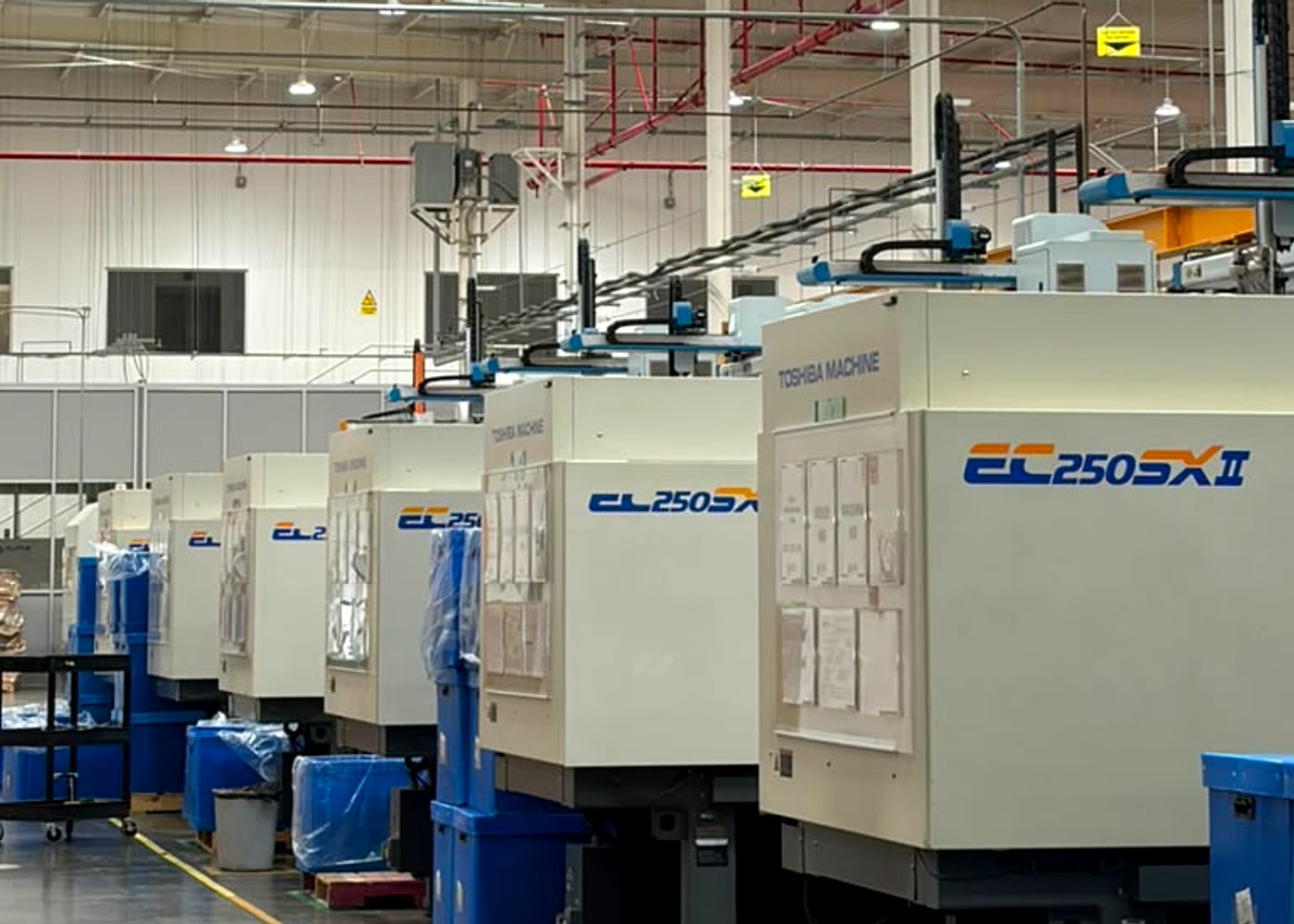
At USMEX, tooling enters under our own IMMEX permit as a duty-deferred temporary import. Our on-site machine shop handles preventive maintenance and repair on the molds we run, so a worn slide or a damaged insert gets fixed in the building instead of crossing the border. All ten of our presses are 250 tonne, so a tool qualified on one can move to another when a press is down for maintenance. If you are about to pay for a tool or trying to move one, send the drawings or 3D files under NDA and we will start with a manufacturability review.
Quick answers
Who owns the injection mold if I paid for it?
Usually you do, but only as clearly as your agreement says. Ownership should pass on full payment of the tooling invoice and be confirmed in writing, with the tool tagged as your property. Without that, a supplier can argue about what you actually paid for.
What is amortized tooling?
The tool cost is spread across a set quantity of parts through the piece price, and ownership transfers once that quantity ships. If you leave early you owe the unamortized balance, so the agreement should say exactly how that balance is calculated.
What should a mold transfer agreement include?
Paid-in-full status, the tool ID, the documentation package, last-shot samples, packing and rust-prevention requirements, who pays freight, and the release date. Agree it in writing before the tool is crated.
Does my mold stay mine if it goes to a molder in Mexico?
Under an IMMEX program, customer-owned tooling generally enters as a temporary import and remains the customer's property. Confirm the specifics for your tool with your counsel and customs broker.