
An injection molding quote is really two prices and a list of assumptions: a one-time tooling price, a recurring piece price, and the conditions under which both hold. The injection molding cost per part is built from resin, machine time, labor, scrap, packaging and overhead, and every one of those depends on something you told the molder, or something they assumed because you didn't.
So read the assumptions before you read the numbers. Two quotes with different piece prices are often quoting different parts: different cavitation, a different cycle, a different resin grade or a different inspection plan. Once the assumptions match, the comparison gets honest.
The tooling line
Tooling is usually the largest single number on the page and the one with the most ways to go wrong later. Start with what the price includes: design, mold-flow analysis, T1 samples, a first-article report, and the rounds of changes after T1. A tooling price that leaves out trials and first articles has moved those costs to a later invoice. Check when it is paid, too. Payment tied to milestones such as order, first samples and approval keeps both sides honest.
Then read the tooling line for four things.
- Ownership: the quote or purchase terms should say plainly that you own the mold once it is paid for, that the molder holds it on your behalf, and that it will be released to you on request.
- Cavitation: how many parts each cycle makes. More cavities cost more to build and cut the machine time per part; fewer cavities are cheaper to build and slower to run. The right number comes from your annual volume, not from the lowest tooling price.
- Steel and construction: hardened tool steel, pre-hardened steel or aluminum, cold runner or hot runner. These decide how long the tool lasts, how much it costs to maintain and how much resin each shot wastes.
- Warranty and shot life: the production life the tool is built for, who pays for maintenance and repairs, and what happens when it wears out. Many molders reference the SPI mold classes, first published by the trade group now called the Plastics Industry Association, where the class signals the intended production life.
How the cost per part is built
The piece price is arithmetic, and it helps to know the formula even if you never see the molder's spreadsheet.
- Resin: shot weight (the part plus any cold runner) times the resin price, adjusted for how much runner can be reground and reused. The grade matters; a specified brand-name grade prices differently from a generic equivalent, and custom colors add cost.
- Machine time: cycle time divided by the number of cavities, times the press's hourly rate. This is usually the biggest lever in the piece price.
- Labor: operators, material handling, and any hand work at the press such as degating, trimming or visual inspection.
- Scrap: startup parts and in-run rejects, priced in rather than ignored.
- Packaging: bags, trays, dividers, cartons and pallets, which add up for cosmetic parts that can't touch each other.
- Overhead and margin: plant costs, quality, engineering support and profit.
Cycle time, minimums, resin clauses and freight
The cycle time is where quotes diverge most, because it is an estimate until the tool has run. Wall thickness drives cooling time, and cooling is often the largest share of the cycle. If one molder quotes a much shorter cycle than the others for the same part, ask how they got there. They may have a better cooling layout in mind. They may also be quoting a number they will revise after T1.
Minimum order quantity and setup charges exist because every changeover costs press time: pulling one mold, hanging another, bringing it to temperature, purging the barrel and running until parts are good. Some molders charge setup per run; others build it into an MOQ. Either is fair. What matters is knowing which one you are buying, and that the MOQ fits how you actually order.
Resin prices move, so most quotes tie the piece price to resin somehow. Look for a clause that names the reference, whether a supplier price list, a published index or the molder's actual invoices, says how often the price is reviewed, and moves both up and down. A quote with no resin clause is either absorbing a risk the molder will want back later or quietly padding the price to cover it.
Secondary operations should be quoted as their own lines: assembly, pad printing, ultrasonic welding, inserts, plating, kitting. Buried in the piece price, they can't be compared or dropped.
Freight terms decide who pays for what after the parts leave the press, and Incoterms are the standard shorthand. EXW means you collect from the molder's dock and handle everything from there, including export clearance, which is awkward across a border. FCA means the molder clears the parts for export and hands them to your carrier. DAP means the molder delivers to a named place and you handle import clearance and duty. DDP means the molder handles duty too. A piece price means little until you know which term it assumes, and who will be importer of record.
Assumptions to confirm before you compare
Put the quotes side by side and make the assumptions match. If a molder didn't state one, ask for it in writing.
- Annual volume and typical release size, which drive cavitation, setup cost and MOQ
- Cavitation and runner type, cold or hot
- Estimated cycle time, and whether it comes from experience with similar parts or a mold-flow study
- Material: exact resin, grade, color and any limit on regrind
- Tolerances: which dimensions are critical and how they will be measured
- Cosmetic class: the surface finish of the tool and which surfaces are visible, since cosmetic parts need more careful handling and packaging
- Inspection plan: first-article terms, in-process checks and the documentation that ships with each lot
- Packaging specification and Incoterm
Why the cheapest piece price can cost the most
The lowest piece price is one number. The cost of a molding program is that number times your volume, plus tooling, plus every problem the quote didn't mention. A low price built on an optimistic cycle, an under-built tool or a thin inspection plan tends to come back as a price increase after T1, extra tool repairs, rejected lots or a program that has to move again. That second move is the most expensive line nobody quoted.
The red flags are usually visible on the quote itself:
- No language on who owns the tool, or tooling that stays the molder's property after you pay for it
- A firm piece price issued before the molder has seen your part data or your existing tool
- No first-article terms, or first articles offered only at extra cost after you approve
- No resin clause, or one that only moves up
- A cycle time far below the other quotes with no explanation
- Secondary ops, packaging or freight folded into one number you can't unpack
How USMEX quotes
We quote after an NDA and a manufacturability review, not before. The review covers resin, gate and cooling, cycle and the quality plan, which is where most of the assumptions above get settled. Programs then go through first-article inspection and in-process QC to your plan.
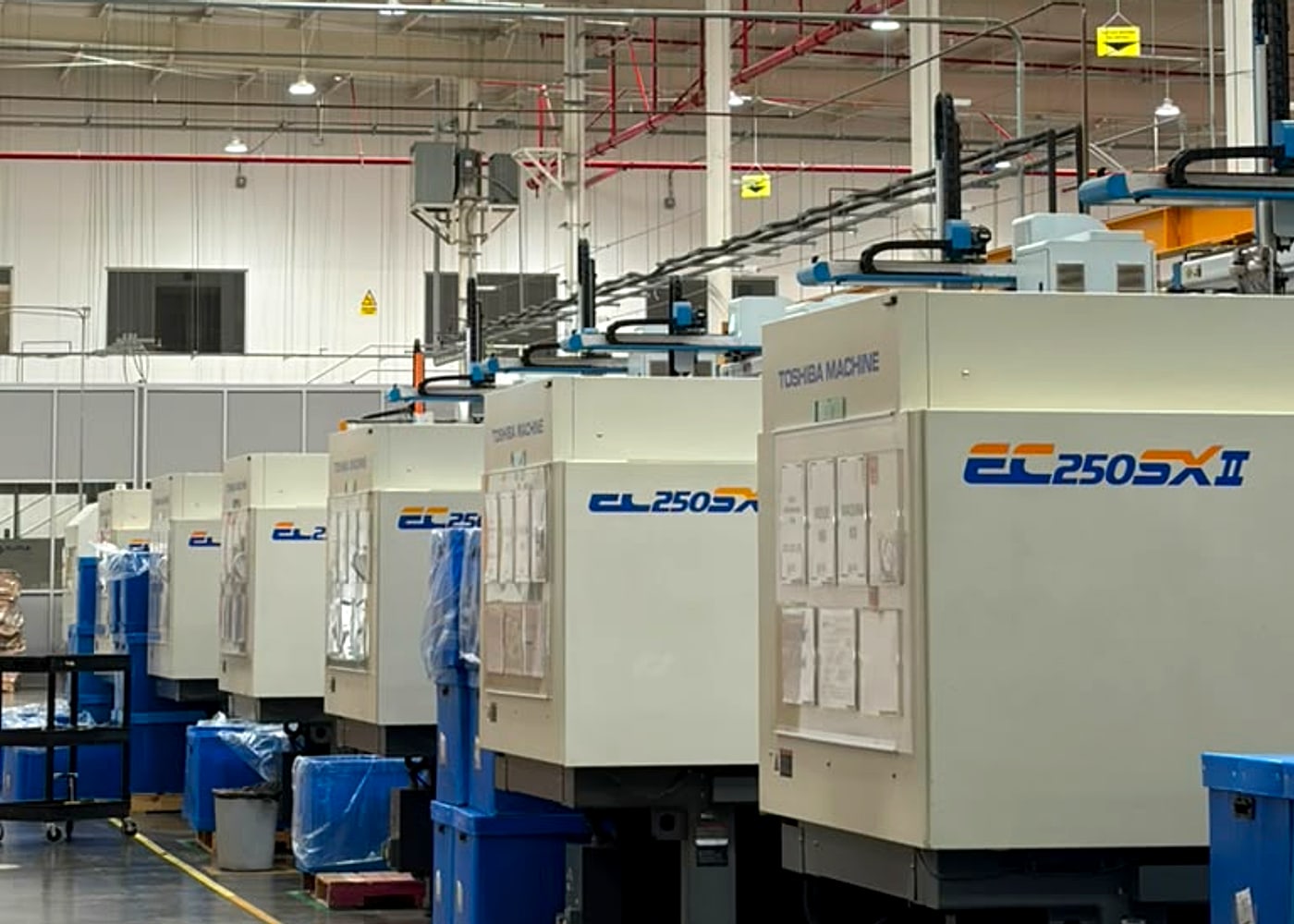
The Tijuana plant runs ten 250-tonne injection presses, seven all-electric Toshibas and three Haitian hydraulics, so a tool qualified on one can run on the others. An on-site machine shop maintains and repairs molds, and plastic extrusion, plating and metallizing, contract assembly and kitting, protective packaging and 3PL warehousing are in house, so secondary operations can be quoted as separate lines from one plant. We operate under our own IMMEX permit, so resin and tooling enter Mexico as duty-deferred temporary imports, and finished parts cross overland to the U.S. in hours. If you are comparing quotes, send drawings or 3D files under NDA and we will do the review.
Quick answers
What should an injection molding quote include?
A one-time tooling price, a recurring piece price, and the assumptions behind both: annual volume, cavitation, cycle time, resin grade, tolerances, cosmetic class, inspection plan, packaging and freight terms. It should also say who owns the tool.
How is injection molding cost per part calculated?
Resin for the part and any runner, plus machine time (cycle time divided by cavities, times the press rate), labor, scrap, packaging, and overhead and margin. Cycle time is usually the biggest lever and the least certain number before the tool has run.
Who owns the mold in an injection molding quote?
It should be you, once it is paid for, and the quote or purchase terms should say so. Look for language that the molder holds the tool on your behalf and releases it on request.
Why do injection molding quotes for the same part differ so much?
Usually because they assume different things: cavitation, cycle time, resin grade, inspection or freight terms. Align the assumptions first; whatever difference remains is the real one.
Should I choose the lowest cost per part?
Only after checking what it assumes. A low piece price built on an optimistic cycle or an under-built tool often comes back as price increases, tool repairs or rejected lots.