
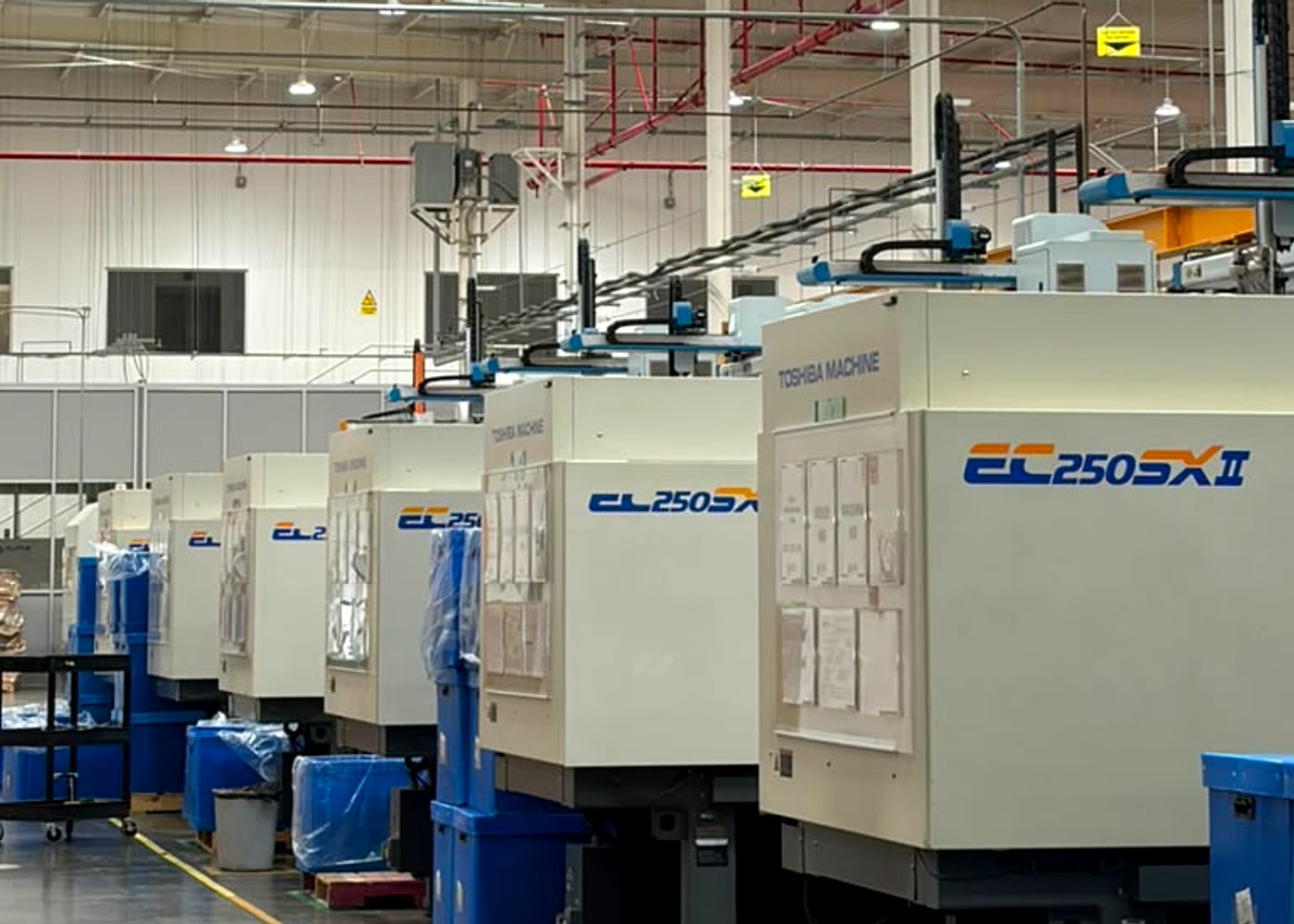
IMMEX is the Mexican government programme that lets a registered company import raw materials, components, equipment and tooling into Mexico without paying duty or VAT, on the condition that the resulting goods are exported. It is the mechanism that makes border manufacturing work: without it, every component crossing south would be dutiable, and the economics of assembling in Mexico for a U.S. market would not hold.
What the permit actually does
The permit changes the customs status of what you bring in. Goods enter as a temporary import — they are in the country, in the programme, and duty is not paid while they remain there. They leave as finished goods. The obligation attached is the one that matters: what comes in under the programme is expected to go back out, within the timeframes the programme sets, and the holder has to be able to show that in its records.
- Raw materials, components and packaging for export production
- Machinery, equipment and tooling used in that production
- Duty and VAT deferred while goods remain in-programme
- Recordkeeping and inventory control obligations sit with the permit holder
Who needs their own permit
A company with a Mexican legal entity, a plant it operates, and staff to run customs compliance can hold its own IMMEX. That is the right answer for a manufacturer committing to Mexico at scale over a long horizon.
For everyone else, the permit is not the hard part — the entity underneath it is. Holding IMMEX means first incorporating in Mexico, registering with SAT for an RFC, registering as an employer with IMSS, and then carrying the ongoing compliance the programme requires. That is a substantial commitment before a single part is made, and it is the reason the shelter model exists.
Manufacturing under someone else's permit
Under a shelter arrangement, the host company already holds the IMMEX, already has the entity, already employs the people and already runs compliant imports. Your materials and equipment enter under its programme. You bring the process, the specifications and the quality standard; the host carries the legal and customs body around it.
The practical difference is time and exposure. A shelter program can start in months rather than the year an entity and permit of your own would take, and if the experiment does not work, unwinding it does not mean dissolving a Mexican company.
IMMEX and USMCA are not the same thing
These get conflated constantly. IMMEX governs how goods enter Mexico — duty-free temporary import for export production. USMCA governs how goods enter the United States — preferential treatment for goods that meet its rules of origin. A part can be made under IMMEX and still fail to qualify under USMCA if its origin content does not meet the rule for its classification.
Both matter to landed cost, and they are checked separately. Ask about origin qualification as its own question, part by part, rather than assuming manufacturing in Mexico settles it.
Where USMEX fits
USMEX holds an IMMEX permit and operates a plant in Tijuana, minutes from the San Diego crossing. Customers manufacture under our programme without holding one themselves: resin, components and tooling enter duty-free as temporary imports, production runs on our floor to your documentation, and finished goods cross overland to the U.S. in hours rather than ocean weeks. Our customs specialists work part-by-part classification with your team rather than handing you a broker's phone number.
Quick answers
What does IMMEX stand for?
Industria Manufacturera, Maquiladora y de Servicios de Exportación — the Mexican programme that allows duty-free temporary import of materials, equipment and tooling for export production.
Do I need my own IMMEX permit to manufacture in Mexico?
No. You can manufacture under a host company's permit through a shelter arrangement, which is why most foreign manufacturers start that way rather than incorporating in Mexico first.
Does IMMEX mean my goods enter the U.S. duty-free?
No — those are separate questions. IMMEX governs duty-free entry into Mexico. Preferential entry into the U.S. depends on USMCA rules of origin, which are assessed per part against its classification.
What happens to goods that do not get exported?
Goods brought in under the programme carry an obligation to be exported within the programme's timeframes. Material that stays in Mexico has to be regularised and the duty paid, which is why inventory control is a core part of holding the permit.