Short answer: a manufacturing operation in Canada that processes U.S.-origin material and ships it back to the U.S. is now exposed to tariffs on both crossings. Relocating that operation to Mexico under an IMMEX shelter can restore duty-free flow under USMCA — while you keep your equipment, your process and your customers. But two questions decide whether the move works, and you should answer them before you commit to anything: how your finished goods are treated at the U.S. border on the way back, and how long Mexican environmental licensing takes for your process.
The double-crossing problem
Many Canadian operations run a loop: material originates in the U.S., crosses into Canada for processing — coating, finishing, assembly, conversion — and returns to the U.S. for sale. Every escalation in the 2026 U.S.–Canada tariff round taxes that loop twice, and neither crossing is optional: the material has to come in, and the product has to go back.
The operations most exposed are exactly the ones least able to raise prices: process businesses whose margin is the value they add between two border crossings. When tariffs on both crossings stack, the margin between them disappears.
Why Mexico changes the math
Mexico under USMCA offers the same continental market access Canada had, without the current bilateral escalation. Under the IMMEX program, raw material and production equipment enter Mexico as temporary, duty-deferred imports, are processed for export, and qualifying goods cross into the U.S. under USMCA. Your production machinery itself can relocate as a temporary import under the same program — you are not buying a new plant, you are moving the one you have.
The shelter route: operating in months, not years
Setting up your own Mexican entity means incorporation, your own IMMEX application, employer registration, environmental permitting and a local team who knows how all of it works — realistically a year or more before the first part ships. A shelter compresses that: you operate inside a host's existing legal entity, IMMEX permit and payroll. The host carries customs compliance, labor law and administration. You bring the equipment, the process and the quality standard, and you keep the customers.
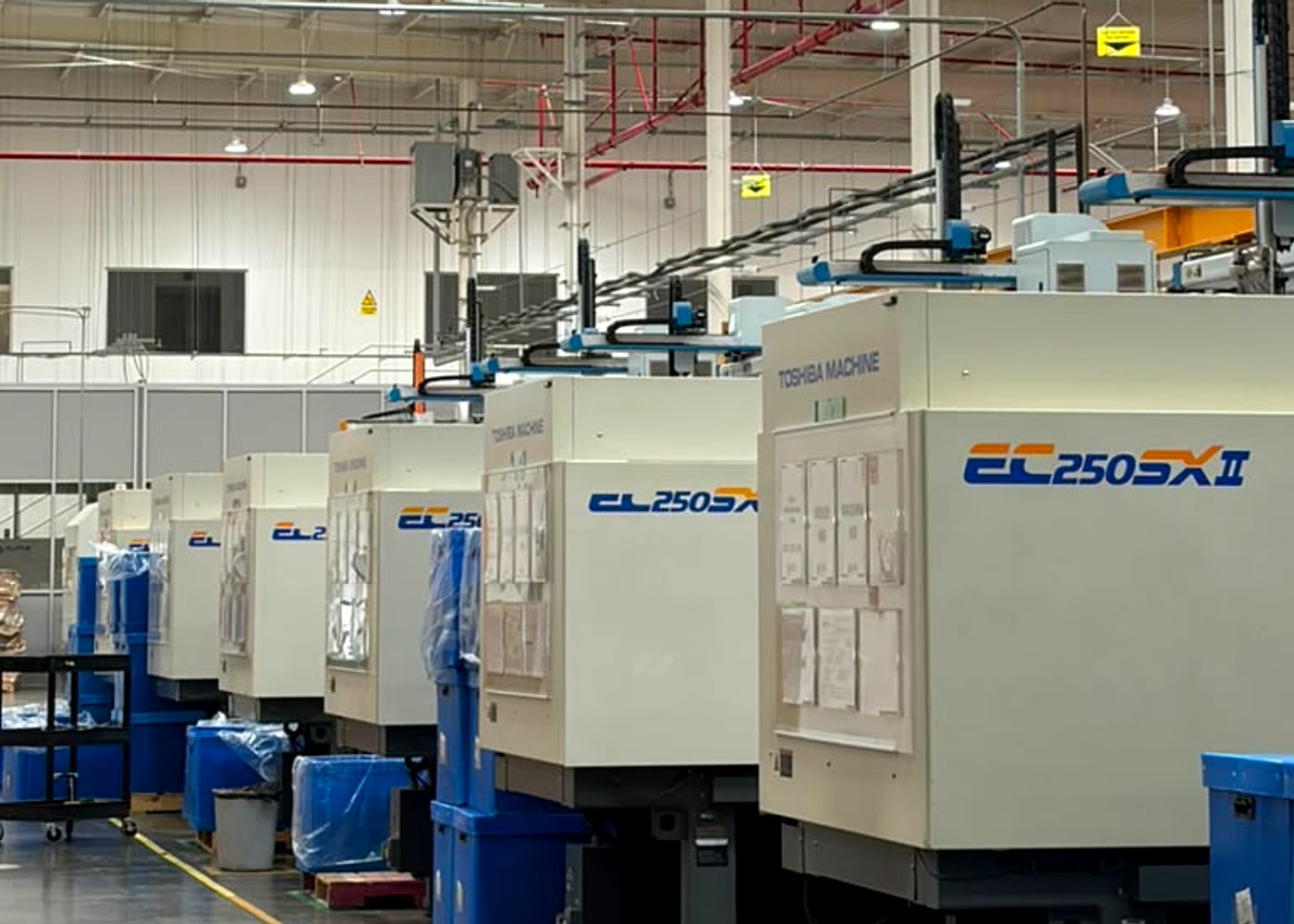
At USMEX in Tijuana, that host structure is already running — and the plant sits twenty minutes from the Otay Mesa crossing, so the return leg to U.S. customers is a short truck ride, not a supply chain.
The two questions that decide the move
First: how are your finished goods treated at the U.S. border on the return leg? For U.S.-origin material processed in Mexico, the answer depends on your product's tariff classification, USMCA origin rules and the U.S. provisions for returned and processed goods. This question IS the economic case for the move. Get a customs broker's written opinion on your specific HTS codes before you sign anything — a serious shelter partner will insist on it rather than hand you an assumption.
Second: how long does Mexican environmental licensing take for your process? Environmental permits are separate from the IMMEX customs program, and the two are constantly confused. For a process involving solvents, coatings or hazardous waste, the ecología work is realistically months, and it — not the building — usually sets your start date. A shelter that already holds environmental licences for similar processes shortens the path; one that quotes you weeks is quoting you a date that was never real.
What moving the line actually involves
The part relocations underestimate is the cutover. Your line is producing today; while it is on a truck, it is not. Plan the move around the questions a shelter should ask you: how much downtime the business can absorb, who decommissions and re-commissions the equipment, who trains the new operators, and how your process documentation and IP are protected during the transfer. If your prospective partner has not asked about any of that, they have not moved a line before.
Quick answers
Do we need to incorporate in Mexico to move our operation there?
Not under a shelter. You operate inside the shelter host's legal entity and IMMEX permit — the host is the employer of record and importer of record, and you keep control of your process, equipment and customers.
What happens to our production equipment at the border?
Under IMMEX, production machinery can enter Mexico as a temporary, duty-deferred import tied to the export program. Your equipment list, with values, becomes part of the program paperwork.
Will our U.S.-origin material pay duty when the finished product returns to the U.S.?
It depends on your product's classification, USMCA origin rules and the U.S. returned-goods provisions — this is the single most important question in the whole move, and the answer is specific to your HTS codes. Get a customs broker's written opinion before committing. We require one before we quote a landed cost.
How fast can a relocated operation be producing in Mexico?
Under a shelter, the legal and customs framework already exists, so the timeline is set by facility preparation and — for processes involving chemicals — environmental licensing, which is measured in months. A shelter should give you a dated plan after reviewing your process, not before.